 Radbin
The short answer: pick by the job. In my tests, Nano Banana 2.1 won product ads, app screens and physics. GPT Image 2.6 won on composition, lighting, logos, vectors and GIFs. Seedream 5 Pro won old photos and clean layouts. Nano Banana Pro kept portraits looking like the same person. And no single model won everything.
Everything here comes from my own tests on YouTube, where I put each new model through the same kinds of jobs. All of these models are also on the Create tab of Radbin, the Photoshop plugin I make, so I've used them side by side on real work. Judge the results yourself: the videos are linked at each test.
Ten tests of Nano Banana 2.1, GPT Image 2 and FLUX 3, 20 minutes.
Which AI image model is best for each job?
| Job | First pick | Also try | Skip |
|---|---|---|---|
| Product and food ads | Nano Banana 2.1 | GPT Image 2.6; FLUX 3 for detail | |
| Text, posters, logos | GPT Image 2.6 | Nano Banana 2.1 for labels | |
| Infographics and layouts | Seedream 5 Pro | Qwen | |
| App and website screens | Nano Banana 2.1 | Seedream 5 Pro | |
| Portraits | Nano Banana Pro | Nano Banana 2 | |
| Edit one part, keep the rest | Seedream 5.5 | Seedream 5 Pro for written notes | |
| Restoring old photos | Seedream 5 Pro | Nano Banana 2.1, then check the face | GPT Image, FLUX 3 |
| Physics and logic | Nano Banana 2.1 | FLUX 3 | |
| Vectors (SVG) and GIFs | GPT Image 2.6 |
How did I test them?
Each time a big model came out, I ran it inside Photoshop against the models it competes with, on the same prompts and the same photos: food and product ads, a game character, an app screen, a poster with text, a portrait to edit, an old photo to restore, and a physics problem. The newest rounds are Nano Banana 2.1 against GPT Image 2 and FLUX 3 in October, and GPT Image 2.6 in November; the older ones pitted Seedream 5 Pro against Nano Banana Pro and GPT Image 2 in July, and nine models on one portrait in April.
That has limits I should say out loud. One prompt per job isn't a lab study, the models changed versions between rounds, and some pairs never met on the same prompt: Nano Banana 2.1 and GPT Image 2.6 haven't, and I haven't tested Ideogram 4.5, Qwen 3 or Seedream 5.5 head to head yet.
Which AI image model is best for product photos and ads?
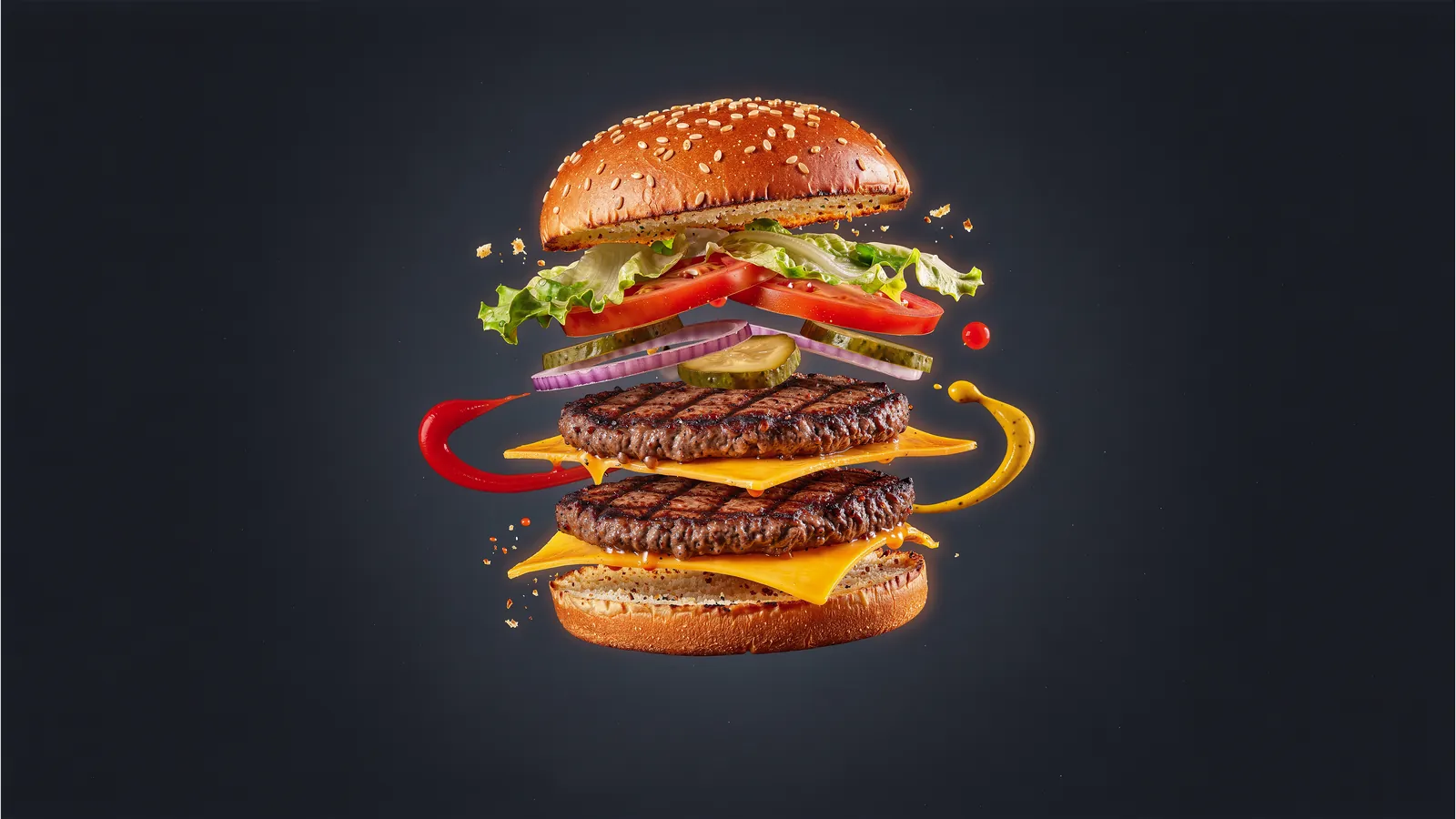
Nano Banana 2.1. On the ice cream ad, "it's a huge win for Nano Banana 2.1" over GPT Image 2. FLUX 3 had a touch more detail, but "from time to time Flux 3 may hallucinate", adding things that weren't asked for. On the burger ad, Nano Banana 2.1 and FLUX 3 both won, and GPT Image 2's came out dark. Watch (6:43)
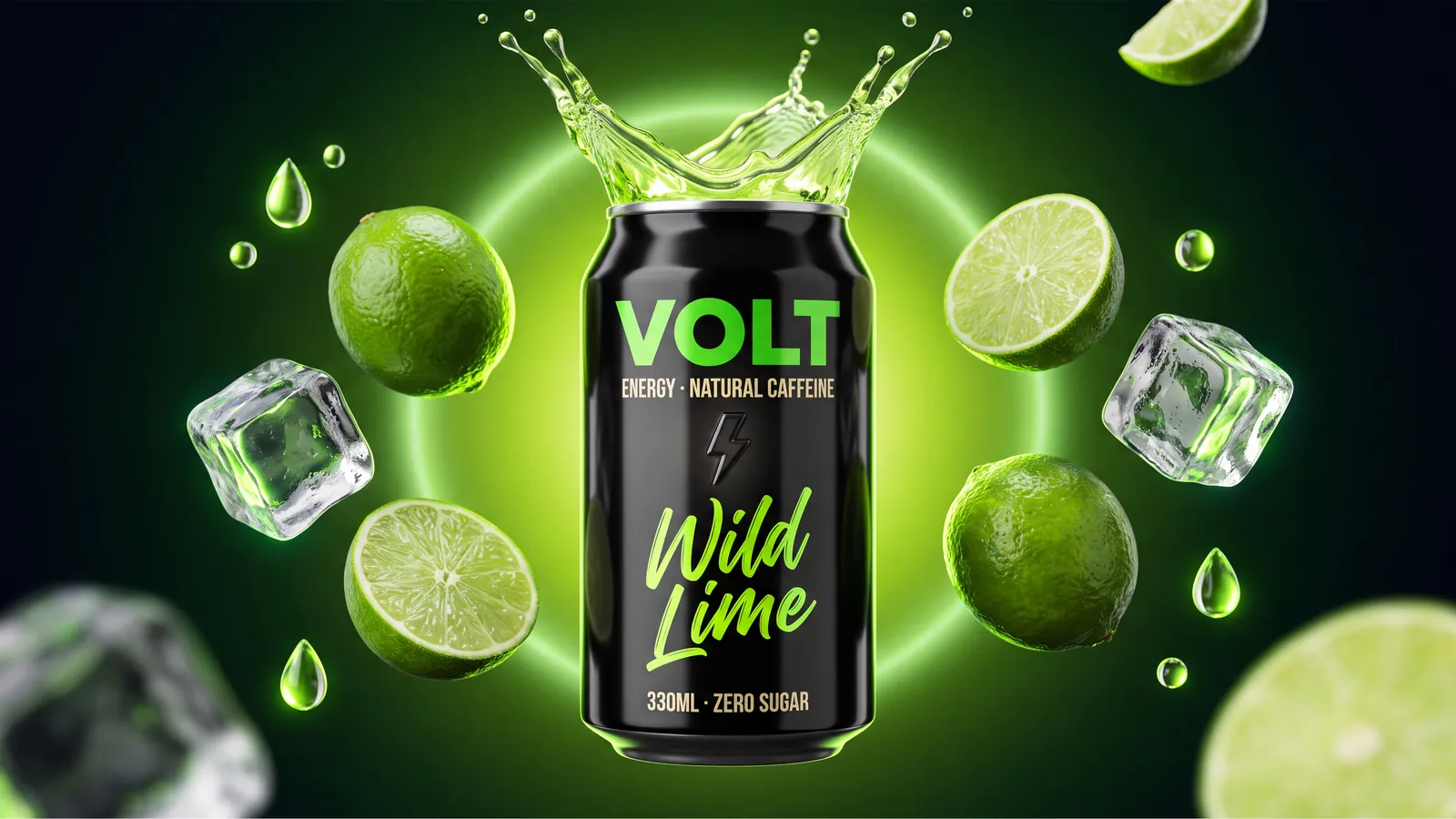
GPT Image 2.6 is the one to try when the lighting and the layout matter most. Against FLUX 3, "usually GPT creates better result" in composition, lighting and colours, and on an energy drink ad "you can see the cut, you can see all the seeds inside the lemon". Watch (5:39)
Which AI image model is best for text and logos?
GPT Image. On a poster test, GPT Image 2 got the text right and the size right too: "The text is correct, and the size is also correct", while Nano Banana Pro ignored the square shape I asked for. GPT Image 2.6 also makes logos on a fully transparent background, and it's the only model here that gives you a vector SVG or an animated GIF. Watch (9:47)
For dense layouts like infographics, Seedream 5 Pro was the cleanest: "The steps are all clear", with no mistake in the text. In an older round, Qwen won a comic strip and a chalkboard. Ideogram 4.5 is built for lettering, but I haven't tested it head to head yet.
Which AI image model is best for portraits?
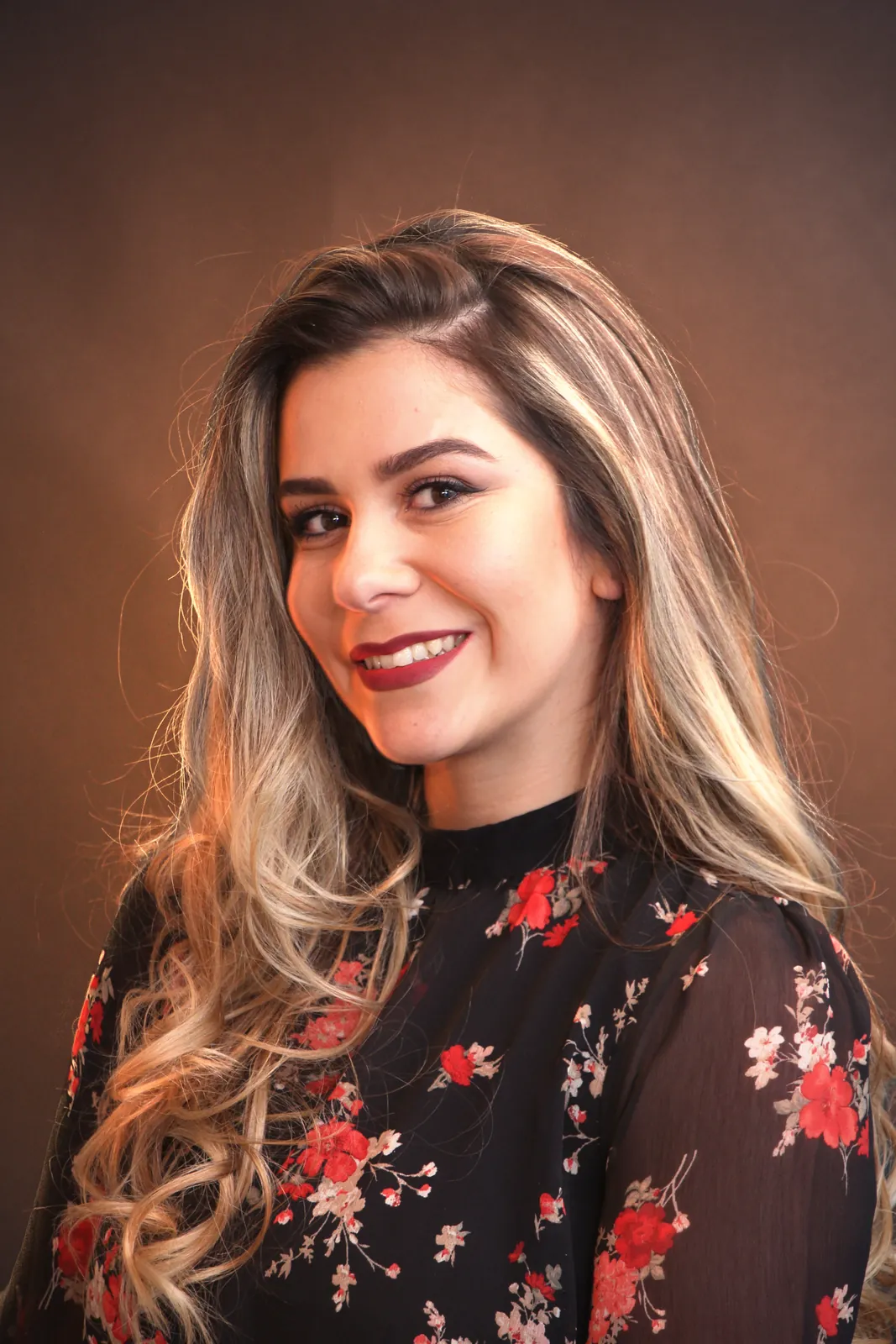
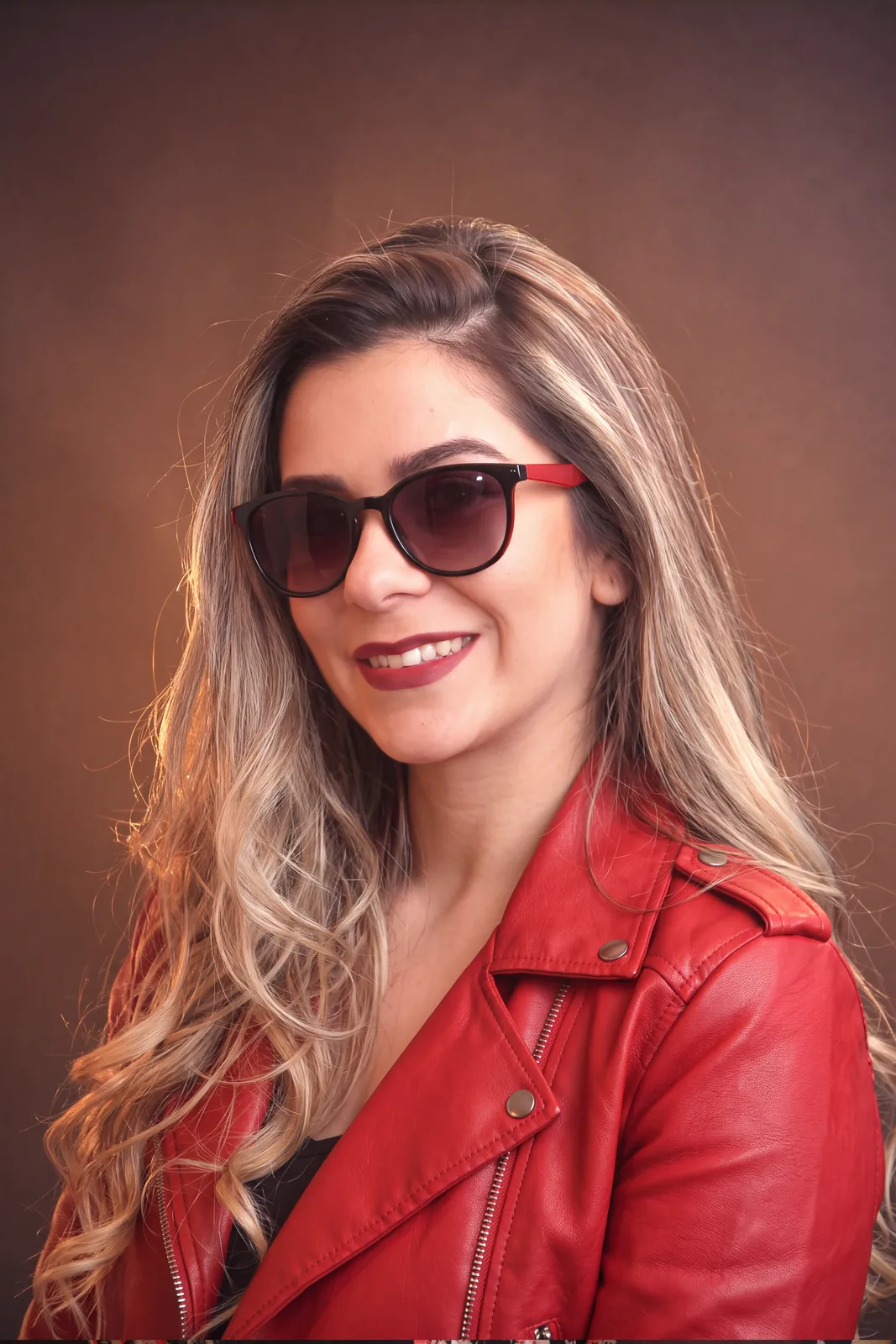
Nano Banana Pro. When I ran nine models on the same portrait, my verdict was that "the best AI model to work on a portrait is Nano Banana Pro and Nano Banana 2". It isn't perfect at everything around a face, though: in a relighting test, Nano Banana Pro failed completely. For rebuilding a small or blurry portrait while keeping the face, I use a tool built for it, Studio portrait: four examples.
Which AI image model edits a selection without changing the rest?
This is where models differ most, and where the leaderboards say least. In my Nano Banana 2.1 test I asked it to change an outfit without moving the person; it got the outfit right, but "it moves it, which I clearly stated I didn't want". Watch (2:57)
Seedream does this best in my experience. As I put it in my Photoshop 2027 video, "the best model right now to edit an image and don't harm anything is Seedream 5.5". Watch (12:55) Seedream 5 Pro was also the only model that followed handwritten notes I'd drawn on a portrait and then removed the notes; Nano Banana Pro and GPT Image 2 left them on the image. And in my Photoshop 2027 test, Seedream 5.5 removed a person and his reflection and changed nothing outside my selection: the change maps are here.
Which AI is best for restoring old photos?
Seedream 5 Pro, by a distance. In my Nano Banana 2.1 test it was "amazing", while FLUX 3 and GPT Image 2 were "awful", and Nano Banana 2.1 was sharp but "changed the original character. Look at the lips". In November I tried GPT Image 2.6 on the same job, and my conclusion was blunt: "for restoring images, we cannot use GPT Image at all". Watch (17:38)
A whole guide on this: how to restore old photos in Photoshop.
Which AI image model understands physics?
Nano Banana 2.1. On light passing through a prism, my verdict was "clearly, the winner of physics is Nano Banana 2.1". Watch (12:33)
Nano Banana vs GPT Image vs Seedream: which should you use?
- Nano Banana vs GPT Image: Nano Banana 2.1 makes fewer mistakes on everyday jobs and costs less at 4K; GPT Image 2.6 composes and lights better and is the one for logos, vectors and GIFs.
- Seedream vs Nano Banana: Seedream wins when the rest of the photo must stay exactly as it is, and on old photos; Nano Banana 2.1 is sharper and goes to 4K, where Seedream 5 Pro stops at 2K.
- FLUX 3: the most fine detail, and the most surprises. Check its results for things you didn't ask for.
Why don't the leaderboards match my tests?
On LMArena's text-to-image board on 12 November 2026, GPT Image 2.5 and 2.6 sat first and second, with Nano Banana 2.1 seventh; Artificial Analysis put GPT Image 2.6 first too. Those boards rate how a picture from a prompt looks to voters, and they're useful for that. None of them tests restoring a photo, keeping a face, or leaving the rest of a photo alone, which is most of what I use these models for in Photoshop. GPT Image tops every board and failed every restoration I ran.
Which models are these, and what do they cost?
| Model | Maker | Released | In Radbin, from |
|---|---|---|---|
| GPT Image 2.6 | OpenAI | November 2026 | 4 credits |
| Nano Banana 2.1 | October 2026 | 2 credits | |
| Nano Banana Pro | November 2025 | 5 credits | |
| FLUX 3 | Black Forest Labs | October 2026 | 2 credits |
| Seedream 5.5 | ByteDance | November 2026 | 3 credits |
| Seedream 5 Pro | ByteDance | July 2026 | 2 credits |
| Ideogram 4.5 | Ideogram | September 2026 | 2 credits |
| Qwen 3 | Alibaba | July 2026 | 2 credits |
Radbin credits cost 3.5 to 5 cents each on a plan, and a 4K image from Nano Banana 2.1 is 5. The full list, with every size: Radbin's pricing.
The best test is your own photo. On Radbin's Create tab you can run the same prompt through several models, and each result lands as its own layer in Photoshop, so you compare them on the work you actually do. More on one of them: what Nano Banana 2.1 is good for.
Every model in this post, on one Photoshop panel
Radbin's Create tab runs GPT Image 2.6, Nano Banana 2.1, Seedream, FLUX 3, Ideogram 4.5 and Qwen on one credit balance, with no API keys, and every result lands as a layer.
Watch Radbin on YouTube
Real tests and tutorials, inside Photoshop and Premiere. See the whole channel.
 21:44Photoshop 2027 new features vs Radbin
 19:57Claude Opus 5.5 edits my video in Premiere Pro
 16:20GPT Image 2.6 in Photoshop: images, vectors and GIFs
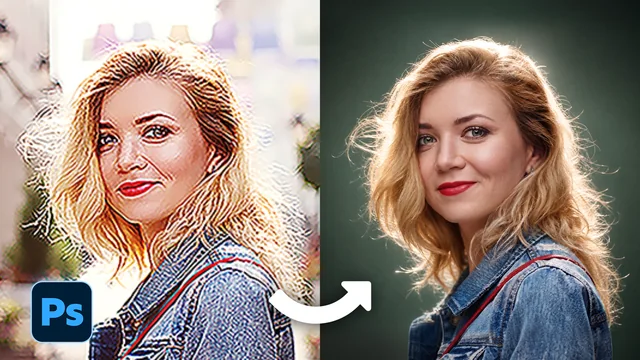 7:37Upscale a low res portrait to 4K in Photoshop
 19:25Relight any photo in Photoshop with AI
 14:31Photoshop Relight vs Radbin Lightsmith
 10:24Retouch skin without losing the texture
 9:28Every Radbin tool in 9 minutes
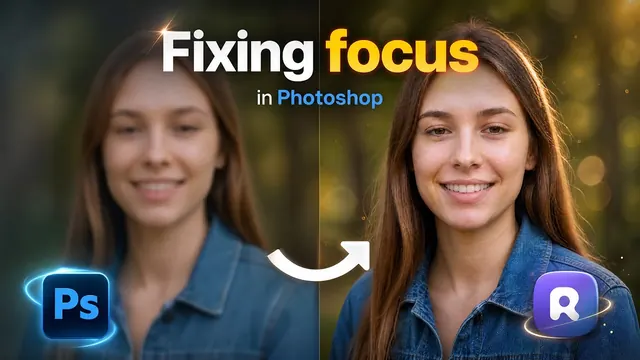 9:50Fix the focus of any photo after it was taken
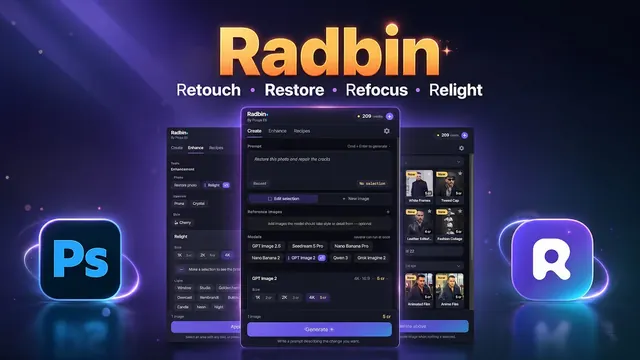 1:43Radbin changes only what you ask